


Trading with Trendlines in Forex 2025: Step-by-Step Guide
A trendline is one of the simplest yet highly profitable tools in technical analysis. Using trendlines is straightforward, and they play a vital role in identifying key support and resistance levels on a chart. This tool helps traders determine the overall market direction and select optimal entry and exit points with greater precision. In this article, we will introduce the different types of trendlines and explore practical strategies for trading with them, so you can improve and strengthen your trading strategies. Stay with us as we break down these essential concepts.
Trendlines are generally divided into two types: ascending trendlines and descending trendlines, each of which we will examine separately. An ascending trendline is typically used in bullish markets and is suitable for entering long positions. Conversely, a descending trendline is used in bearish markets and is mainly applied for entering short positions.
Ascending trend line
When the market forms higher lows and higher highs, it indicates a bullish trend and that price is moving upward. To draw an ascending trendline in a bullish trend, connect the first low to the second (or a higher low) and extend the line to complete it. At this point, we have an ascending trendline and should wait for the price to retest the trendline. When the price touches the trendline, we can expect it to move higher.
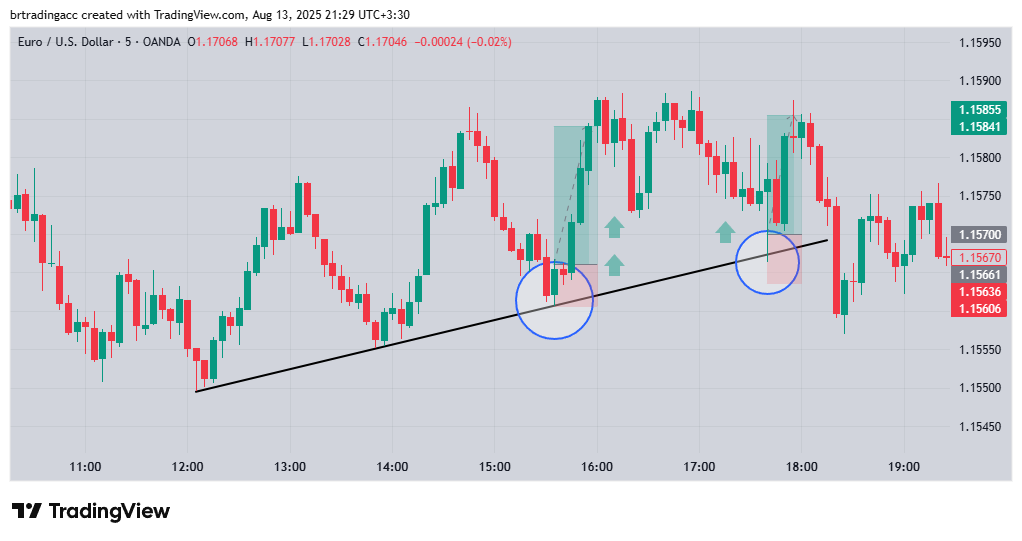
Photo by TradingView
In the chart above, as you can see, in a bullish trend, the first two lows were connected with an ascending trendline and extended forward. The price then retested the trendline, and upon the appearance of the first green (bullish) candle, we entered a long position, with the price rallying up to the previous high. After the third touch, the price tested the trendline for the fourth time and then moved upward again, creating another long trading opportunity.
Descending trend line
When the market forms lower highs and lower lows, it indicates that the trend is bearish. To draw a descending trendline in a bearish market, connect one high to a lower high and extend the line to complete the descending trendline. A descending trendline typically acts as a resistance level, and each time the price touches it, it tends to decline and move lower. Therefore, this trendline serves as an effective tool for identifying and entering short positions.
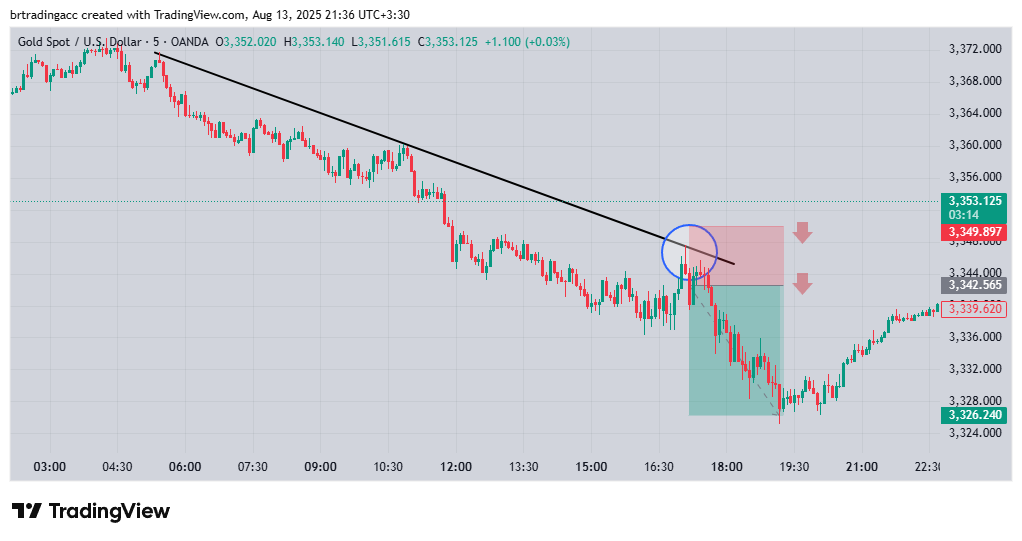
Photo by TradingView
In the example above, after identifying and confirming the bearish trend, we connected two highs with a descending trendline and extended it. The price then touched the drawn descending trendline and moved downward. Notice that in this example, the descending trendline acted as a strong resistance area. On the third touch, we entered a short position and profited from the price decline that followed.
Trendlines are one of the most popular and profitable strategies in forex and financial markets. One of their greatest advantages is their simplicity. By mastering trendlines, you can make more successful trades and steadily grow your account.
We hope you enjoyed this article.