



Trade Forex and XAU/USD Using the DXY US Dollar Index
Today we are going to talk about one of the most important and influential factors in Forex trading. By knowing and analyzing it, we can analyze all currency pairs well and have a clear view of the market. The US Dollar Index, known by the symbols USDX or DXY, is one of the most important and influential indices in Forex and technical analysis. This index is very important for Forex traders
By using the correlation of currencies with the US dollar or DXY, we can understand the strength of other currencies in the market. You can also analyze the XAUUSD currency pair by checking the dollar index.
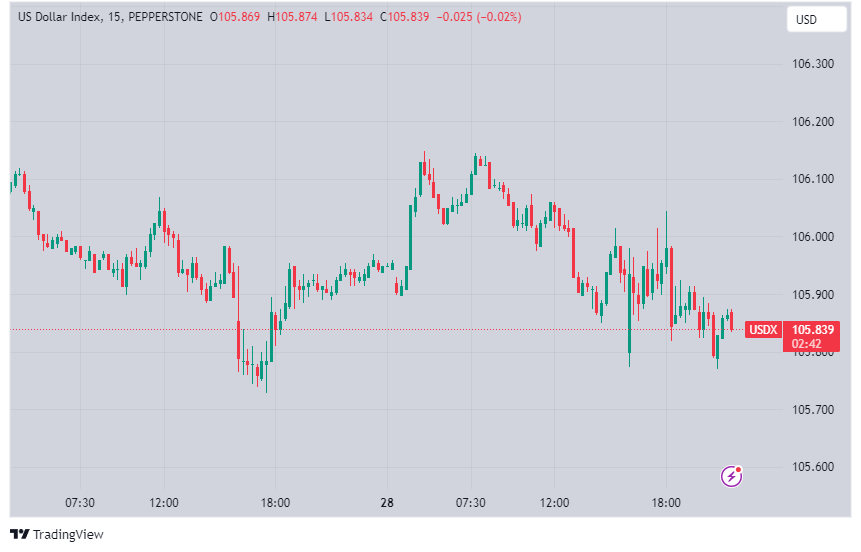
Photo by TradingView
In the forex market the USD currency is present in many currency pairs and we can have a much clearer forecast of the forex market and many other currency pairs by analyzing the DXY or USDX index.
Be sure to check the US Dollar Index before you trade. This index is very important and affects other currencies.
How to analyze the XAUUSD using the DXY index?
The XAUUSD has a very negative correlation with the DXY index, which means that the trend of the XAUUSD is opposite to that of the DXY or USDX index. That is, when the trend of the DXY index is bullish, the trend of the XAUUSD is bearish. But if the trend of the DXY or USDX index is bearish, then the price and trend of the XAUUSD will be bullish.
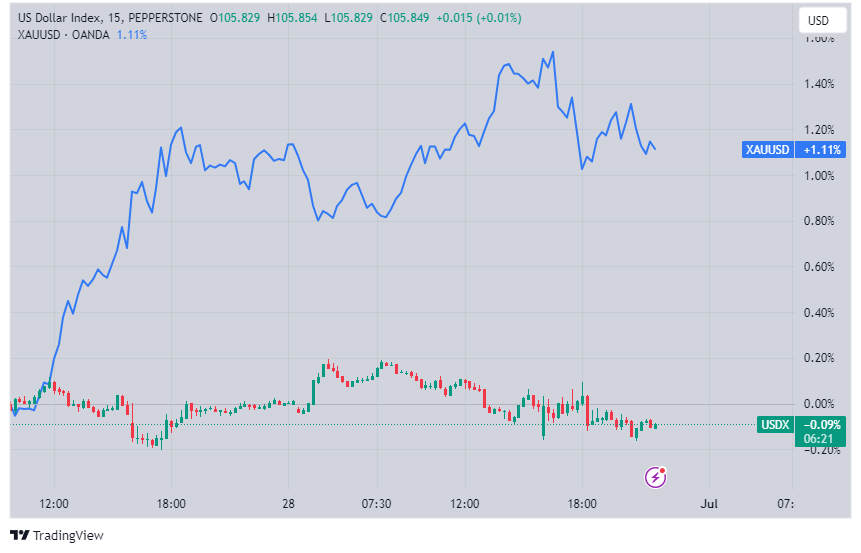
Photo by TradingView
In the photo above, you can clearly see the negative correlation between the DXY (US dollar index) and XAUUSD. The dollar index in the chart above has experienced an upward trend, while the price movement of XAU/USD has been sideways and range-bound, showing no signs of higher highs or higher lows. Considering the negative correlation between the dollar index and XAU/USD, we observe that the likelihood of a strong upward movement in XAU/USD is very low.
Please note that the possibility of a sharp upward move in XAU/USD is very low, but not impossible, because financial markets operate on probabilities. We do not rely solely on correlation to analyze the market; rather, we use it as one tool or technique alongside comprehensive technical analysis and price action.
We hope you enjoyed this article.