


what is a sideways trend in forex trading
Today in this article we will talk about one of the most important trends called sideways trend. On the sideways trends we can open buy and sell positions and easily profit from the rise and fall of the price. The famous phrase “buy low, sell high“ is a perfect example of this type of trend.
How to identify sideways trends?
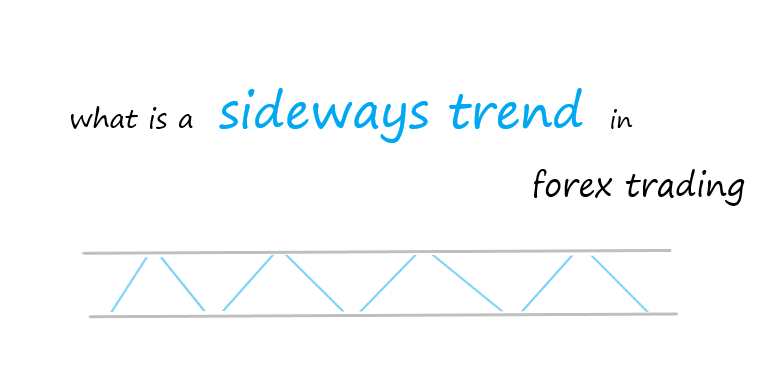
When the market does not make such higher highs or lower lows, and the highs and lows are about the same size, and the market moves in a horizontal channel, we call this trend sideways.
In these trends, we first draw a horizontal line on the highest price top and another horizontal line on the lowest price to form a channel. By doing this, you will know which areas the price will support and rise and which areas the price will fall.
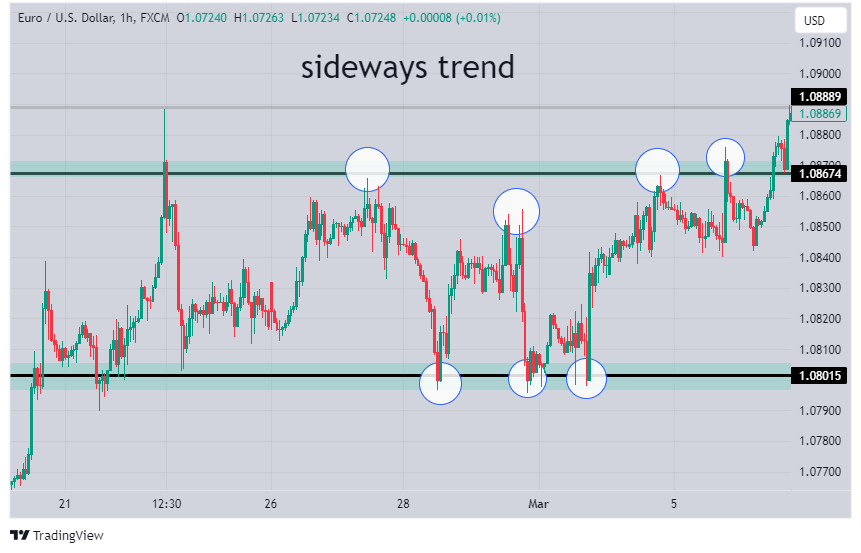
Photo by TradingView
Please refer to the chart above. When the market forms highs and lows of approximately equal magnitude, we draw horizontal lines at the highest and lowest price points to delineate a sideways channel.
Within this channel, each time the price approaches the lower boundary (support level), it reverses upwards, offering an optimal entry point for a long position. Conversely, when the price reaches the upper boundary (resistance level), it tends to reverse downwards, presenting an opportunity to enter a short position.
Examine the chart to identify sideways trends, construct the channel accordingly, and initiate trades based on these observations. It is important to note that occasional price action may exhibit false breakouts, where candlesticks temporarily breach the channel boundaries but fail to sustain movement beyond them. In such instances, price typically reverts to the established channel and maintains the sideways trend.
However, when the price decisively breaks above or below the channel boundaries with significant momentum and continues to form candlesticks outside the channel, it indicates a trend reversal and the termination of the sideways market phase. Traders should then reassess their positions and adjust risk management parameters such as stop-loss orders accordingly.
I hope you enjoyed this article.